Family Detention & the Expansion of the Private Immigration System
Across the country, private prison corporations are expanding detention facilities and infrastructure designed to confine thousands of people – migrants, asylum seekers, green card holders, U.S. citizens, and innocent bystanders – caught in the Trump Administration’s current deportation sweeps and the anticipation that millions more will be arrested. The growing number of detention contracts set a dangerous precedent, normalizing secretive detention, undermining constitutional protections, and diverting hundreds of millions in public funds away from essential state needs.
As immigration enforcement intensifies across the nation, the detention system has expanded to meet the demand. The number of people held in immigration detention has increased by roughly 75 percent this past year, with approximately 73,000 individuals detained nationwide as of January 2026. Nearly half of ICE detention facilities exceeded their contractual capacity at least once, as facilities become overcrowded, conditions deteriorate and oversight diminishes. Expanding detention capacity without adequate accountability heightens the risks of neglect, abuse, and unsafe living conditions — harms that disproportionately affect vulnerable populations, including asylum seekers, families with children, LGBTQ, and POC.
The South Texas Family Residential Center in Dilley, Texas, is one of the largest immigration detention facilities in the United States and has become a central site for the detention of migrant families. Private contract detention centers, like Dilley, profit from the detention of migrant families while exposing them to harmful and inhumane conditions.
Civil & Human Rights Violations
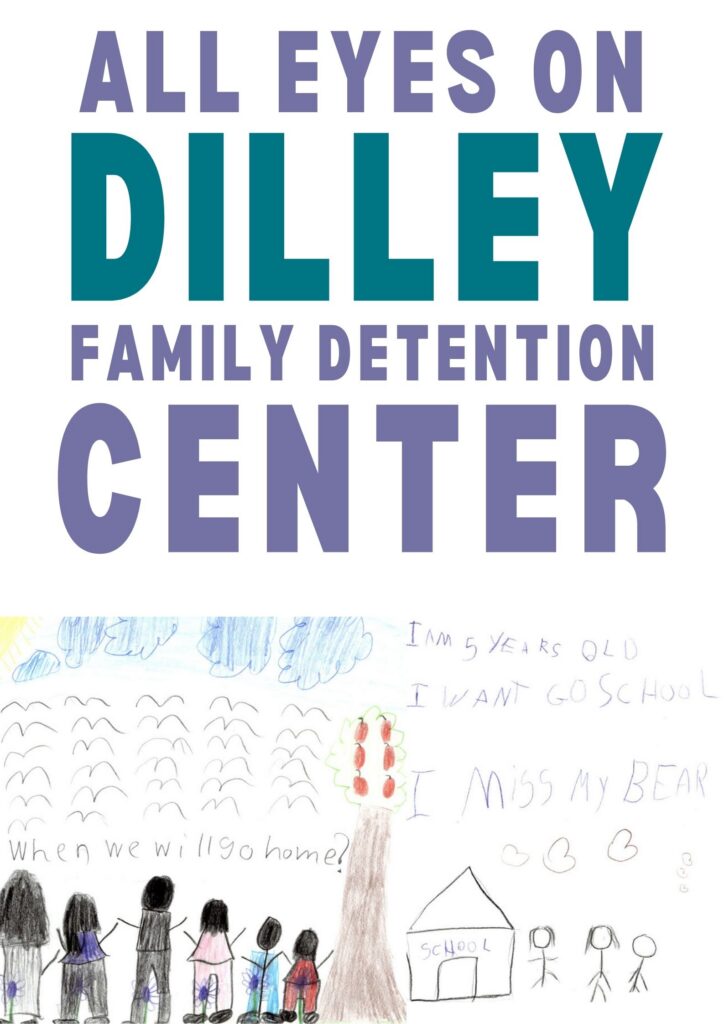
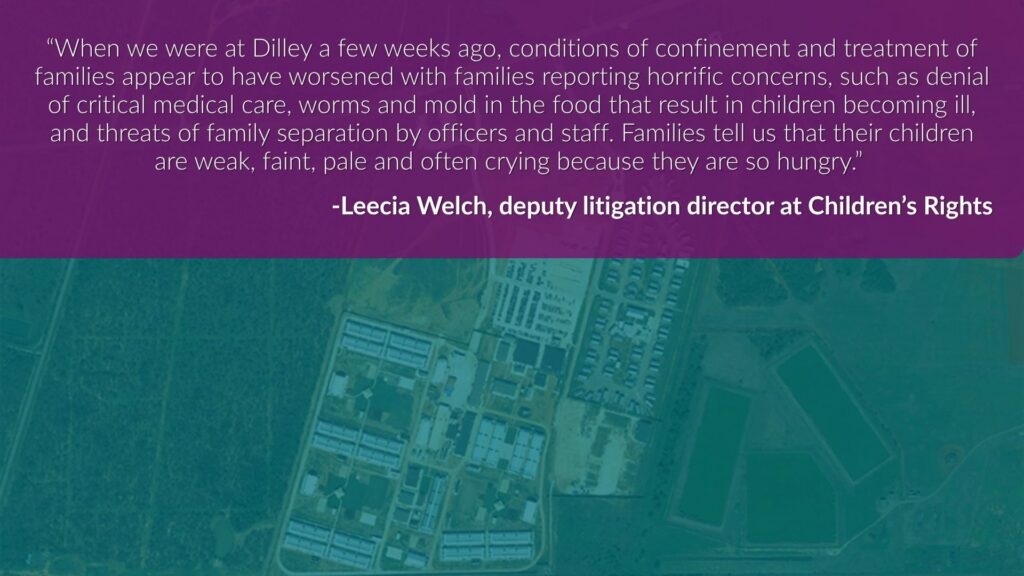
Reports from detention centers across the country describe inhumane conditions. Detainees have reported being held in crowded, windowless rooms where dozens of people sleep head-to-toe and share a single toilet. Others have described sleeping on floors with limited food or sanitation. Conditions inside Dilley have raised similar concerns. Families detained at the facility have described recurring illnesses among children, delays in receiving medical care, and overcrowded living spaces. In letters written from inside the center, children described constant boredom, fear, and uncertainty.
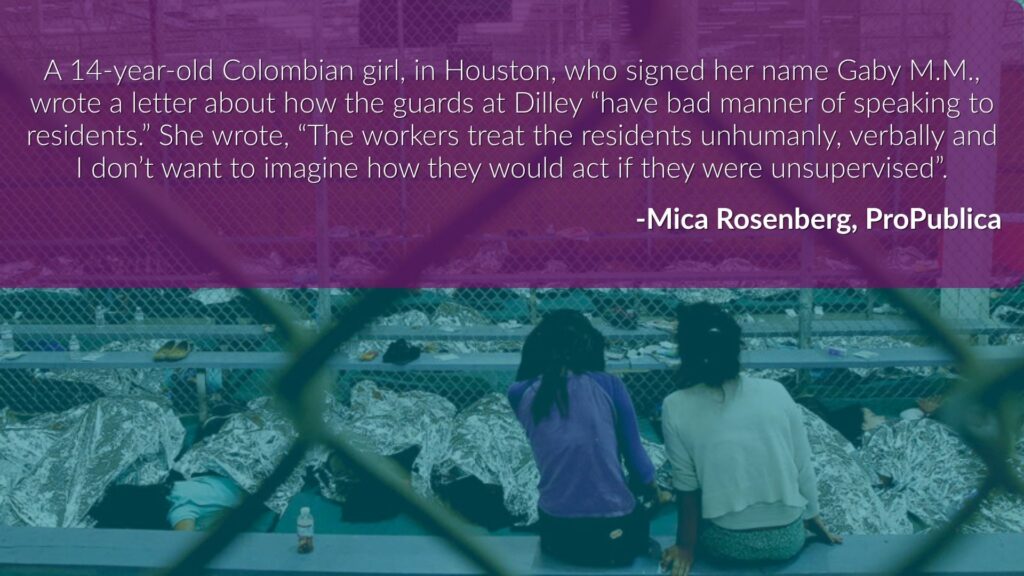
Beyond physical conditions, immigration detention has profound psychological consequences. Detention environments—characterized by confinement, surveillance, and uncertainty—are associated with increased rates of anxiety, depression, and post-traumatic stress disorder. “Compounded trauma” is when individuals fleeing violence or persecution experience additional psychological harm as a result of detention itself. For children, these effects can be particularly severe, disrupting emotional development, education, and long-term well-being.
Detention for Profit
Detention centers, primarily operated by companies like CoreCivic and GEO Group, profit by charging government agencies (like ICE) a daily rate per detainee, often guaranteed by contracts requiring minimum bed occupancy. The Dilley facility is operated by CoreCivic, one of the largest private prison companies in the country. In recent years, CoreCivic has secured more than $680 million in federal immigration detention contracts, with revenue from ICE detention contracts rising with the expansion of Trump’s deportation initiative. . Profits are maximized by cutting operational costs—such as staffing, food, and medical care—and utilizing, or underpaying, detained labor for maintenance tasks.
This profit model is reinforced by political investment and public funding structures. The expenditure of public tax dollars is directly linked to lobbying expenditures by major detention contractors—like CoreCivic and GEO Group. During the 2024 election cycle these companies and affiliated contractors collectively contributed approximately $4.7 million to political campaigns, with the majority directed toward candidates supporting expanded enforcement. For every $1 spent on political contributions, major detention contractors could receive more than $11,000 in increased annual revenue. It is estimated that these companies could gain more than $5.2 billion in additional revenue in a single fiscal year as the detention industry expands.
Take Action
Contact your elected representatives. Urge them to..
- Conduct overseen visits to hold detention center officials accountable for inhumane conditions
- Champion and end to practice and funding of detention itself
Organize Vigils
Organize vigils at detention centers to show support to the detainees and draw public attention to the violations of civil and human rights behind walls
No Kings Protest
Join the nation-wide No Kings protests and raise these demands on March 28.