NNIRR Heads to the 2026 International Migration Review Forum (IMRF)
“As migrants continue to face decreased rights and fewer protections, governments have a responsibility to hear from civil society groups at the IMRF about how to realign policies to reflect rights-based approaches to migration. Our participation as NNIRR is in that spirit, to engage with nation-states and dialogue with partners about uplifting principles that uphold the human rights of migrating people."
Pedro Rios, NNIRR Board Member
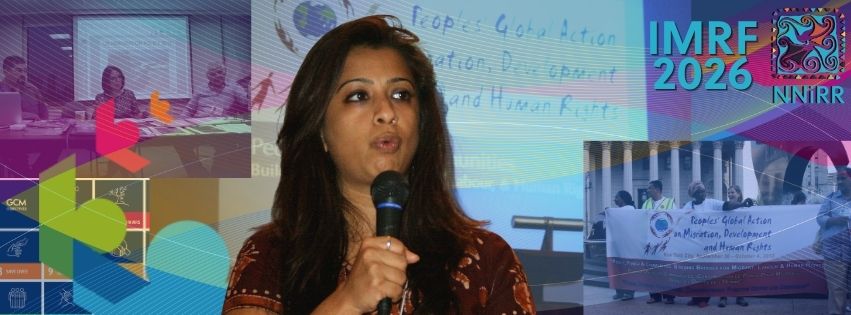
On May 4th-8th, the National Network for Immigrant and Refugee Rights (NNIRR) will join global partners and international organizations at the United Nations Headquarters in New York City for the 2026 International Migration Review Forum (IMRF). The IMRF assesses progress on the Global Compact for Safe, Orderly and Regular Migration (GCM) and is where civil society will push for migrant human rights.
What is the Global Compact for Migration?
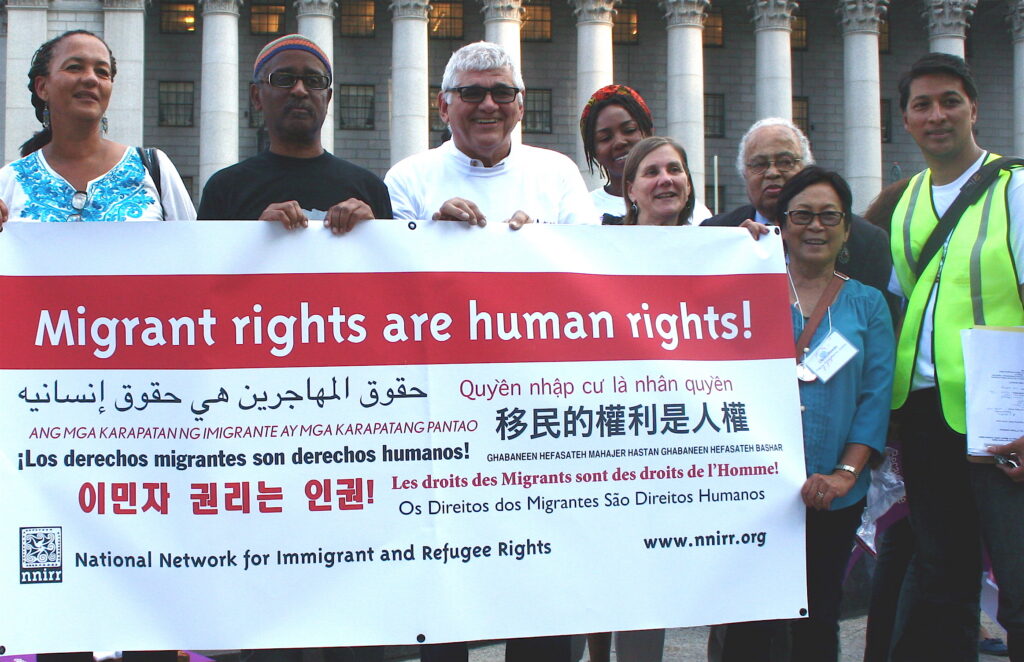
Adopted in 2018 by 164 countries, the Global Compact for Migration (GCM) is an international framework “focused on shifting the global narrative on migration towards respecting the human rights of all migrants and stressing adherence to international laws.” It outlines 23 objectives addressing concepts such as root causes, expanding regular pathways, protecting labor rights, and ensuring access to services.
The compact affirms that all migrants regardless of status are entitled to fundamental human rights and dignity.
NNIRR’s role in shaping the Global Compact represents decades of international movement-building. Beginning in the 1990s, NNIRR worked alongside global civil society partners to advance human rights for all migrants. The Network co-founded the International Migrants Rights Watch Committee, helped launch the Global Coalition on Migration, the Women in Migration Network, and organized in UN spaces and people’s forums worldwide to engage partners in the development of the Compact.
What is the IMRF?
The International Migrant Review Forum (IMRF) is held every four years to review implementation of the Global Compact by the United Nations in partnership with civil society. The first IMRF in 2022 took place at a time when the world was still grappling with the COVID-19 pandemic. The pandemic shaped conversations, discussing how migrants were often excluded from healthcare relief, and basic services. While some countries expanded protections there was an overall gap between reality and commitments in the Compact.
The 2026 Progress Declaration
The Progress Declaration is an inter-governmentally negotiated outcome document that reflects Member States’ collective assessment of progress in implementing the GCM. The document reflects remaining gaps and challenges, and outlines priorities and commitments to accelerate implementation in the years ahead. But in reviewing draft versions, civil society advocates have noted:
- A weakening of human rights language
- Resistance to naming critical issues such as child immigration detention, mass deportations, and border issues
- Efforts to minimize references to climate displacement, despite its growing impact
At the same time, there are important interventions from states and coalitions pushing back:
- Countries including Brazil, Ghana, Nigeria, Ethiopia, Portugal, and Spain have advocated for stronger human rights framing
- Feminist and migrant justice advocates are pushing for gender-aware (gender-responsive) language, including protections for migrant women workers
The Progress Declaration is a consensus document and through negotiations there is a risk of failing to meet the urgency of the moment. Procedural barriers, such as limited language access, visa restrictions for participants, and last-minute negotiation changes, constrain meaningful civil society participation.
What Civil Society Is Bringing to IMRF 2026
Despite these challenges, civil society is organizing to push for a stronger, more accountable outcome in light of the multi-sided attack on migration and migrant rights, internationally.
Key priorities include:
- Ending immigration detention, particularly for children
- Expanding pathways to regularization and legal status
- Strengthening labor rights, including access to justice and living wages
- Ensuring gender-based and rights-based migration policies
- Advancing protections for people displaced by climate change
- Non-regression of rights in migration governance
NNIRR will be working alongside global partners to ensure that the final Declaration reflects not just political compromise, but the lived realities and demands of migrant communities.
Take Action
May Day 2026– Workers Over Billionaires
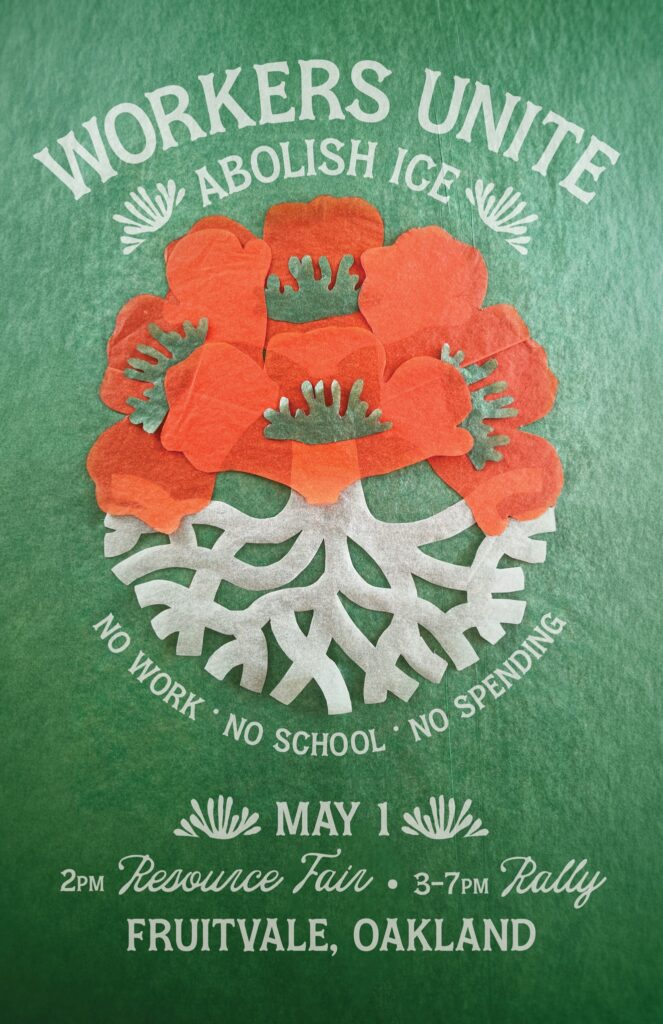
This May Day, communities are taking collective action to demand putting people over profit. On May 1st, workers, students, and families, will rally and organize: No Work, No School, No Shopping.
Communities are demanding:
- Taxing the rich
- An end to ICE, war, and state violence
- Expanded democracy and protection of rights
Resource Fair in Oakland
The Oakland Sin Fronteras coalition is organizing a resource fair and rally on May 1st.
This event will bring together community members in solidarity against xenophobia, border militarization, detention, and state violence—while uplifting the leadership and resilience of migrant communities.
This May Day, stand in unity with workers and migrants everywhere—fighting for dignity, justice, and collective liberation.
Resource Fair in Oakland
The Oakland Sin Fronteras coalition is organizing a resource fair and rally on May 1st.
This event will bring together community members in solidarity against xenophobia, border militarization, detention, and state violence—while uplifting the leadership and resilience of migrant communities.
This May Day, stand in unity with workers and migrants everywhere—fighting for dignity, justice, and collective liberation.